How Large Language Models (LLMs) Really Work
You’ve probably seen the buzz around ChatGPT, Bard, Claude, and other AI tools that seem almost human in conversation. But what’s happening behind the scenes when you type a question and get a surprisingly thoughtful answer in return? The secret lies in Large Language Models (LLMs), a breakthrough technology that’s changing how we interact with machines.
At their core, LLMs are trained on vast amounts of text — think books, articles, websites, and more. Instead of memorizing every word, they learn the patterns of language. It’s a bit like how you finish your friend’s sentence when you know what they’re about to say. The model doesn’t “know” facts the way we do; it predicts the next word in a sequence based on what it has seen before.
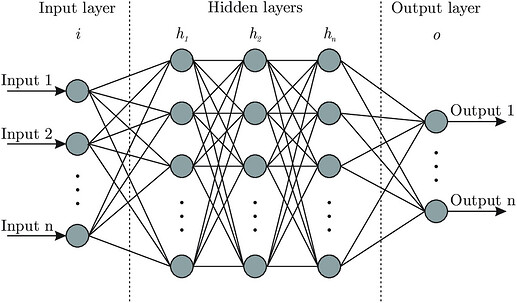
The magic happens through neural networks. These networks are built from layers of nodes (like artificial “neurons”) that pass signals to each other. Each layer extracts a deeper level of meaning — from recognizing individual letters, to understanding words, to grasping context and tone. With billions of parameters (mathematical weights), an LLM learns the subtle nuances of human communication.
But scale is everything. Early language models could handle small tasks, but LLMs are massive — sometimes with hundreds of billions of parameters. That scale allows them to generate coherent essays, write code, or even mimic creative storytelling. It’s the difference between a dictionary and an entire library with an expert librarian who knows where everything is.
Of course, LLMs aren’t perfect. They don’t “understand” the world the way humans do. They can make mistakes, mix up facts, or confidently generate answers that aren’t true. Yet their ability to process and generate text at lightning speed makes them invaluable for education, customer service, research, and creativity.
Looking ahead, LLMs are evolving to be more efficient, more reliable, and more connected to real-world data. With integration into search engines, smart devices, and enterprise tools, they’re quickly becoming as essential as the internet itself. The next time you ask an AI a question, you’re experiencing the power of billions of computations happening in milliseconds — all thanks to the architecture of LLMs.

Comments